
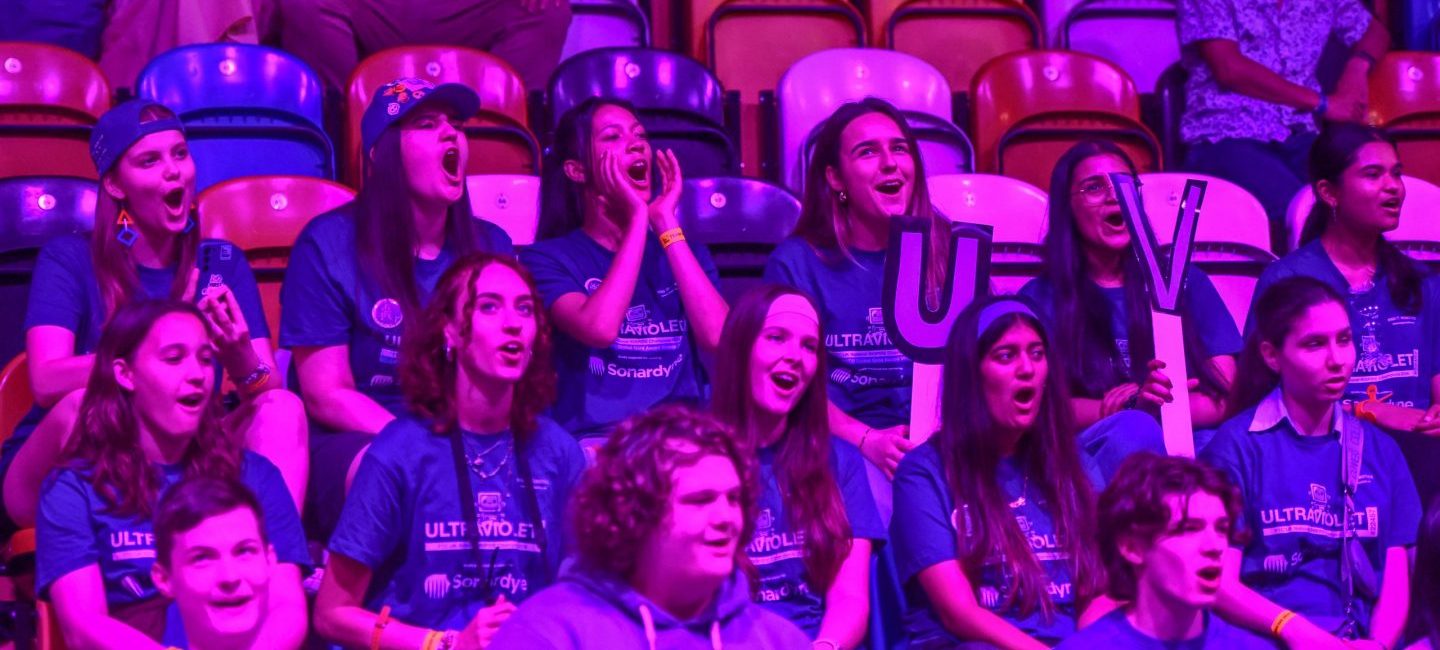
For many young people, the moment they realise STEM is for them doesn’t happen in a classroom setting. It happens when they get the chance to build something, solve a problem or lead a team.
At FIRST UK, we see that moment every year through our FIRST Tech Challenge programme — when young people step into engineering, often for the first time, and discover what they’re capable of.
We spoke with three women across our FIRST UK community – an alum, a volunteer from industry and our Chair of Trustees – about the moment STEM became part of their identity.
-
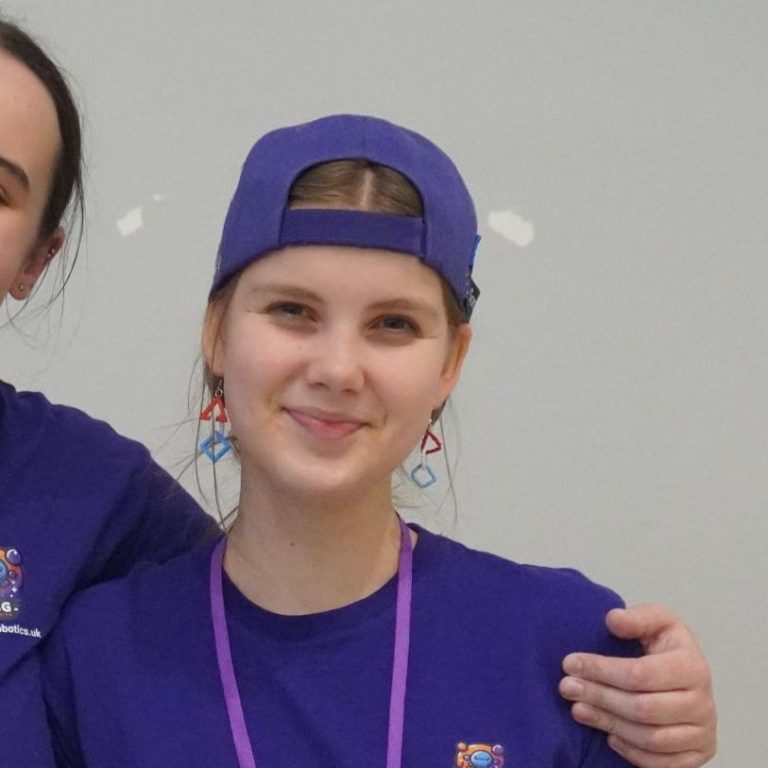
- Emily – FIRST Tech Challenge alum
-
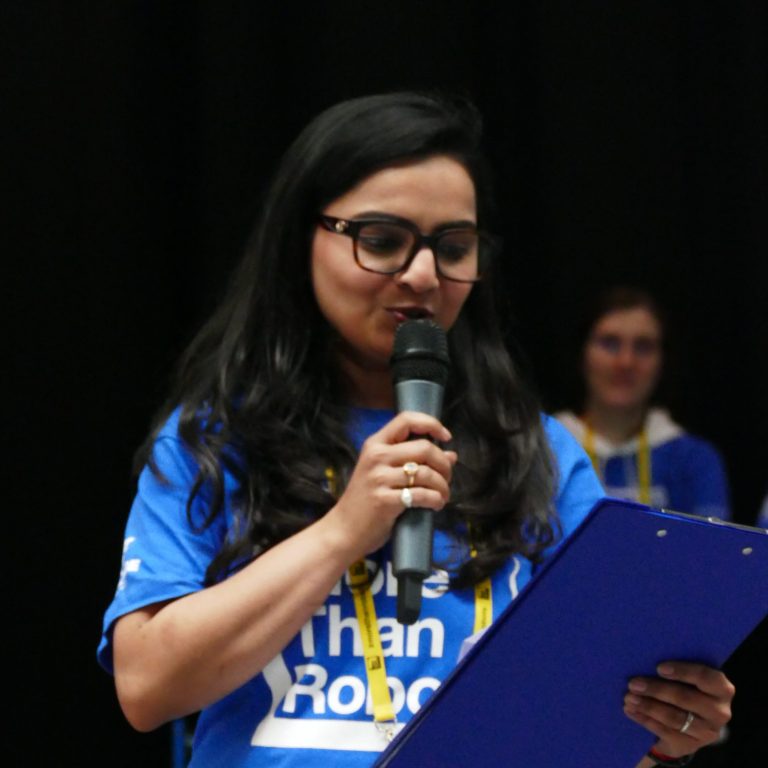
- Tanvvii Yotikar – Game Changer volunteer
-
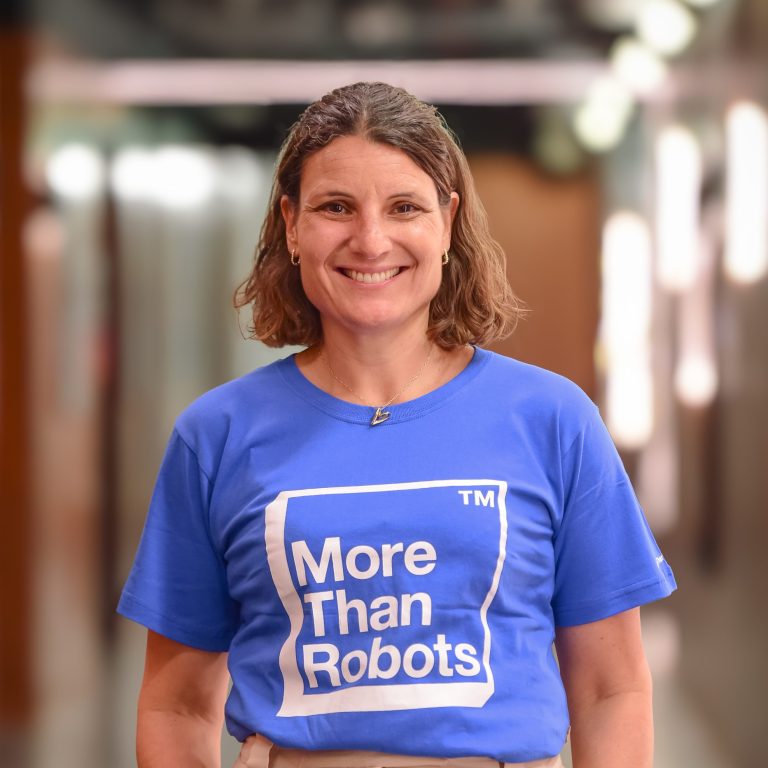
- Amelia Gould – Chair of Trustees, FIRST UK
Their experiences all point to the same thing: belonging in STEM rarely starts with confidence. It starts with opportunity.
“They saw something in me before I saw it in myself”
Emily, former member of Ultraviolet and 2024 Team Great Britain, first discovered robotics when she went along to her school’s club. None of her friends were going, but she decided to give it a try.
“I actually turned up to the second session by accident,” she laughs. “They were deciding their team name and planning what to build. It was a group of really smart girls, and somehow they wanted me to lead the team.”
“They saw something in me before I saw it in myself. I remember thinking, ‘I can’t quite see what you’re seeing right now, but I’m going to trust that you’re right.’”
“When you’ve got a big box of kit in front of you and everyone’s looking at you asking, ‘What do we do now?’ – that’s when you realise maybe this is for you.”
Three seasons of FIRST Tech Challenge later and now volunteering at events, Emily is preparing to start a degree apprenticeship in digital technology in September.
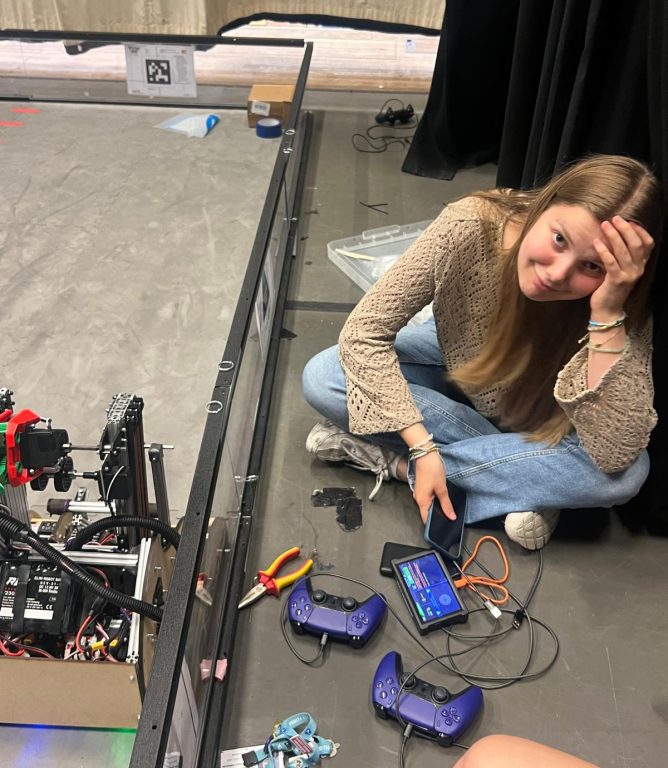
Emily configuring her team’s robot.
She credits her FIRST Tech Challenge experiences with giving her the confidence to pursue a career in STEM.
“I don’t think I would have applied for the opportunities I did without FIRST Tech Challenge. It gave me the confidence to challenge myself and realise that I can do this.”
But just as important is the community.
“When you meet people who love STEM, it’s like a shared language. Even if you’ve never met them before, you can connect straight away.”
Curiosity is the real starting point
For Tanvvii Yotikar, that sense of belonging came later.
“I remember sitting in a room full of engineers discussing a complex design issue. Instead of feeling out of place, I found myself completely engaged in solving the problem.”
“I realised STEM isn’t about fitting a stereotype. If you’re curious and enjoy figuring things out, you belong here.”
Today, she works in engineering, helping complex products move from development into manufacturing. Alongside her career in industry, she volunteers with FIRST UK.
People like Tanvvii are exactly why we call our volunteers “Game Changers” – they bring real industry experience into the programme, helping young people nurture the curiosity that got them into STEM in the first place.
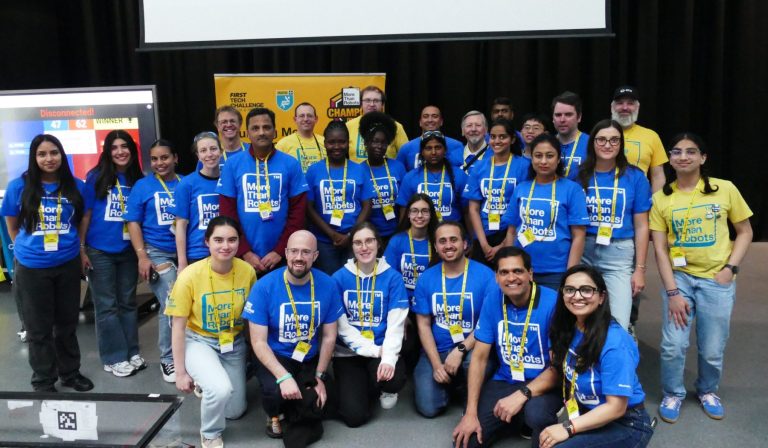
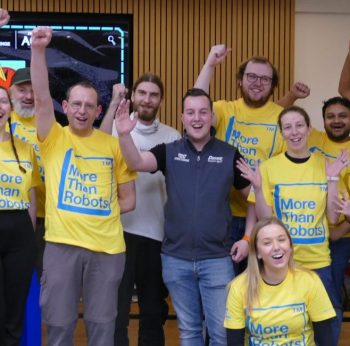
Tanvvii (bottom right) with her fellow Game Changers at the 2025 Sutton qualifier.
“Exposure is powerful,” she says. “Many young people simply don’t realise the opportunities that exist in STEM.”
“When young people build something, solve a challenge and work as a team, they start to realise they can do this.”
And for Tanvvii, that shift in perspective is what matters most.
“In my opinion, STEM needs more curious minds, not just more engineers.”
Belonging builds future leaders
For Amelia Gould, Chair of Trustees for FIRST UK, the moment STEM clicked came during an engineering induction course.
“One of the first activities was building towers out of spaghetti and marshmallows,” she recalls. “It sounds simple, but I absolutely loved it.”
“That’s when I realised those formulas I’d been learning in physics and maths could actually create something. That was the moment I knew I wanted to be an engineer.”
Amelia has since built a career spanning over 25 years across the Royal Navy, BAE Systems and defence technology. Today, she also serves on the UK Government’s Industrial Strategy Advisory Council.
For her, belonging plays a crucial role in helping young people stay and grow in STEM careers.
“If people feel like they belong, they feel safe and comfortable being themselves. That means they’re not wasting energy worrying about how they’re perceived – they can focus on doing their best work.”
“If people don’t feel they belong, they opt out,” she says. “And when that happens, we lose future leaders and role models who could be pulling others up behind them.”
Opportunity comes first
Confidence doesn’t appear overnight.
It grows when young people are trusted with real challenges, encouraged to try things they’ve never done before, and given the space to discover what they’re capable of.
As Emily puts it: “Don’t decide something isn’t for you before you’ve tried it.”
Belonging in STEM doesn’t start with talent. It starts with opportunity.
Emily found it when she was trusted to lead. Tanvvii found it through curiosity and community. Amelia found it by turning formulas into real-world engineering.
Want to see how hands-on experiences are shaping future engineers, innovators and problem-solvers?
 LinkedIn
 Instagram
 YouTube